
Form E can support an ACFTA preferential-duty claim. It does not, by itself, guarantee a 0% rate, import permission or customs release. Confirm the destination’s applicable tariff line, origin conditions and import requirements before contracting a shipment. Zero customs duty also does not mean zero landed cost.
01 / When can Chinese garlic qualify for 0% duty?
Start with the product, not the certificate. Fresh or chilled garlic falls under six-digit HS 0703.20. The national tariff line 0703.20.90 is a relevant starting point for non-seed garlic in the sources below. Ask your customs broker to confirm the full local code for the actual goods; do not reuse it for powder, dried flakes, frozen products or planting bulbs without checking.
Indonesia’s published ACFTA schedule in PMK 46/PMK.010/2022 lists 0.00% for 0703.20.90. This is a preferential schedule rate, not a ruling on your shipment. Verify the current line, any amendments and eligibility at declaration. See the Indonesian tariff schedule ↗.
For Vietnam, Decree 118/2022/NĐ-CP provides the ACFTA schedule for 2022–2027. Have the importer check the garlic line and applicable conditions in that schedule before using 0% in a landed-cost calculation. We are not issuing a Vietnam shipment-specific tariff determination. See Vietnam’s official ACFTA decree ↗.
The origin declaration must be backed by the real supply chain. Sourcing or repacking goods in China alone is not proof of Chinese origin. Keep crop and sourcing records available for the issuing authority. Include any applicable import taxes, inspections, port handling, reefer electricity, broker fees and inland transport in your budget.
02 / Form E sample: what to check
Use the official blank Form E ↗ to understand the layout. The checklist below is an educational field guide, not an issued certificate or evidence of our past exports. No certificate number, official stamp or signature is fabricated.
| Fields | Buyer review |
|---|---|
| 1–3 | Exporter, consignee and routing details must match the intended shipment. |
| 5–7 | Check item identification, package marks, description, package count and six-digit HS code. |
| 8 | Origin criterion. “WO” applies only where the wholly obtained rule is actually satisfied and supported. |
| 9–10 | Reconcile quantity or weight and invoice details. The form calls for FOB value when the RVC criterion applies. |
| 11–13 | Review exporter declaration, certification and any applicable special-case indicators with the issuer. |
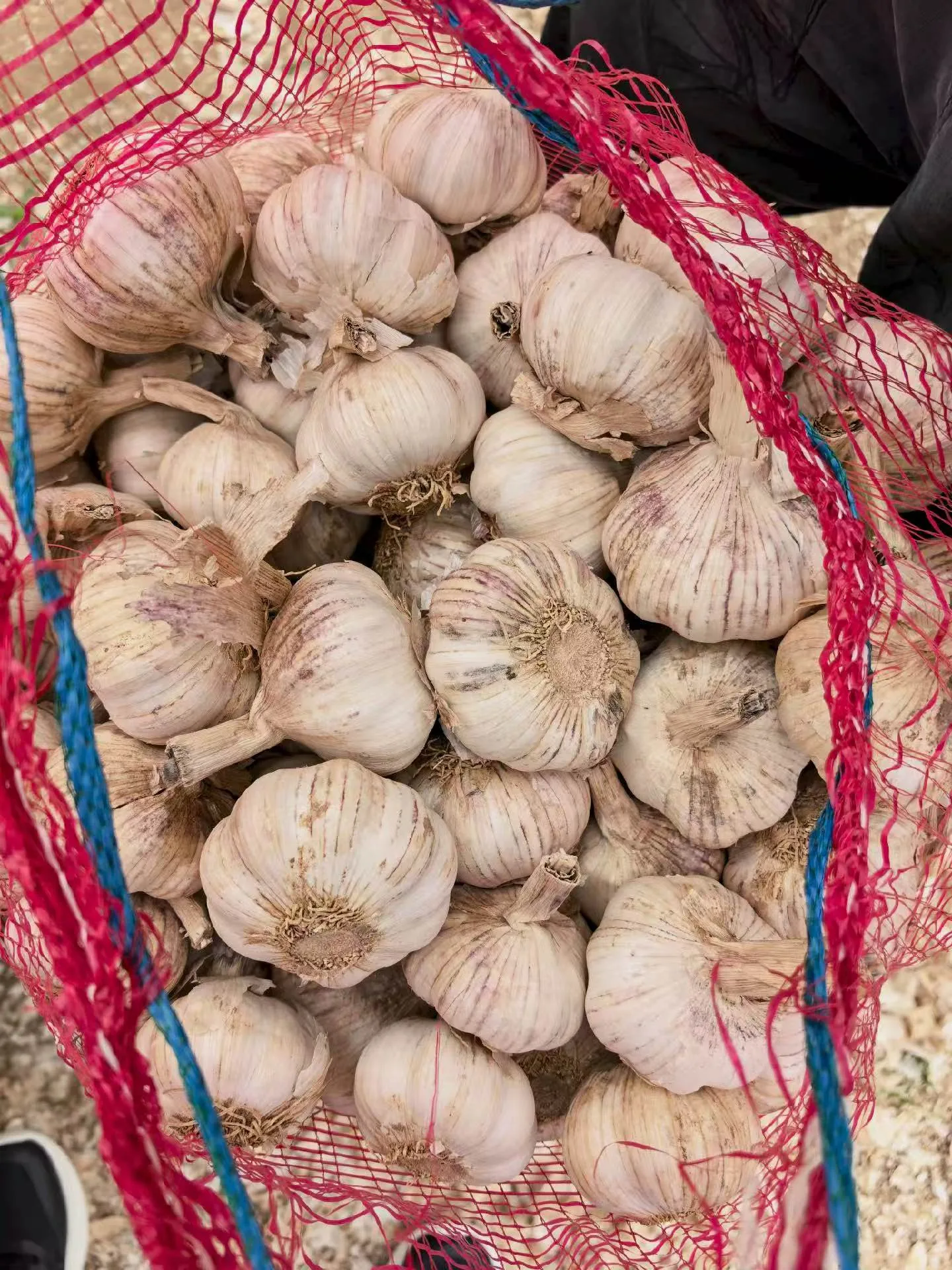
Illustrative packing description only: whole garlic, 5.5–6.0 cm, 1,000 mesh bags × 20 kg net = 20,000 kg net. Enter actual shipment data, not this example.
Ask your broker to review the draft alongside the invoice and packing list before issuance. Confirm how the importing authority accepts the proof of origin. Indonesia Customs describes electronic ACFTA Form E arrangements; a scanned PDF sent by email should not automatically be treated as an accepted electronic origin document. Read Indonesia Customs’ FTA guidance ↗.
ACFTA certification procedures govern issuance and verification. If exporter, invoicing party or routing differs, have the issuer and broker check the correct procedure in advance. Resolve discrepancies through the proper issuing process. Read the certification procedures ↗.
03 / Build a shipment document checklist
Use one agreed shipment specification for your supplier, forwarder and customs broker. Our practical checklist is below; the importer must confirm the documents required for its particular entry.
- Commercial invoice: buyer and seller details, product description, currency, unit price, total value and agreed delivery term.
- Packing list: bag or carton count, net and gross weight, size grades and lot references. If sizes are mixed, list each separately.
- Transport document: correct consignee, destination, container and seal details, consistent with the booked route.
- Origin documentation: Form E when applicable, with any required transit or third-party invoicing evidence.
- Plant-health documents: confirm phytosanitary certification, declarations, inspections and any treatment requirements with the destination authority.
- Importer-side permission: current approvals and registration applicable to the product, volume and intended arrival period.
Form E concerns origin and preferential duty. It does not replace plant-health clearance. Vietnam’s trade portal associates the garlic tariff entry with plant-quarantine measures. Review the Vietnam Trade Portal entry ↗.
04 / Destination checks: Vietnam and Indonesia
VIETNAM · HO CHI MINH CITY
Planning a shipment to Cát Lái
Ask the buyer’s broker to confirm the declared tariff line, the ACFTA claim, quarantine registration and the exact discharge terminal before booking. Share draft documents early so consignee names and product descriptions can be checked together. Confirm inspection arrangements, terminal reefer power and onward delivery to the buyer’s storage.
These are planning checkpoints, not a statement that a particular shipment has been approved. Confirm the selected entry point and product admissibility for your intended arrival date.
INDONESIA · SURABAYA
Planning a shipment to Tanjung Perak
Request written confirmation that the importer can legally bring in the proposed garlic shipment through its selected port. The Ministry of Trade publishes specific garlic import-approval guidance. Check approval validity, permitted quantity and the conditions that apply before loading. Do not assume Form E replaces a Persetujuan Impor (PI). See the Ministry’s garlic import FAQ ↗.
Import rules have also been amended in 2026. Have the importer check the operative rules and applicable inspection or verification steps, rather than relying on an old permit checklist. Confirm quarantine handling, reefer power and truck arrangements for the actual terminal. See the 2026 Ministry update ↗.
If the shipment transships, keep the routing evidence and confirm the origin rules for transit. Indonesia Customs’ FTA guidance explains conditions for transit through another country; an itinerary change deserves a document review before departure. Check the transit guidance ↗.
05 / How much garlic fits in a 40′ RH?
A 40′ RH generally refers to a 40-foot high-cube refrigerated container. Its equipment payload is not the same as saleable garlic net weight. Packaging, pallets and securing materials consume payload; airflow, dimensions and route restrictions can reduce the practical load further.
For reference, Maersk lists a 29,670 kg maximum payload for its standard 40-foot high-cube reefer example. CMA CGM lists 29,260 kg for its example and explicitly describes its specifications as non-contractual. Equipment and local restrictions vary. These figures are carrier equipment examples, not our promised loading quantities. Maersk specifications ↗; CMA CGM specifications ↗.
Start with the carrier-approved payload and route limit. Deduct bags or cartons, pallets and securing materials. Then check the packing dimensions, required air circulation and loading height. Obtain a confirmed loading plan before treating any net tonnage as bookable.
Our minimum order is 20 metric tonnes. The table shows packing arithmetic for that order size, not maximum container capacity:
| Net weight per mesh bag | Bags for 20 MT net | Before booking |
|---|---|---|
| 10 kg | 2,000 | Confirm gross weight, bag dimensions, loading arrangement and carrier limits. |
| 20 kg | 1,000 | |
| 25 kg | 800 |
For cartons or palletized orders, we need the proposed pack dimensions and pallet pattern to assess the load. We do not publish a universal carton-versus-mesh loading ratio. Tell us your size requirement within 4.5–6.0 cm and above, and we will confirm the available packing against the actual lot.
06 / Agree the cold-chain handover before sailing
Record the agreed product condition, temperature, ventilation and handling instructions in the shipment plan. Confirm them with the supplier and carrier for the actual crop, packaging, route and transit time. A cold-room setting is not automatically the correct reefer setting, and we do not prescribe one universal temperature in this guide.
Our recommended handover record includes lot photos, inspection results if commissioned, packing and weight checks, agreed reefer settings, container and seal numbers, loading photos and any temperature logger details. Decide who reviews the arrival condition and how promptly the buyer will report a problem. This creates a useful record instead of relying on a general quality promise.
Send a complete buying brief
Tell us your destination port, target arrival period, preferred bulb size, net quantity and packing. Let us know whether your customs broker has confirmed the import permission and whether Form E is needed. We can then discuss the current product, document availability and quotation. Prices vary by lot, size, quality and shipment requirements; a USD quotation is confirmed for the specific inquiry.
YOUR NEXT SHIPMENT STARTS WITH THE SPECIFICATION
Tell us where your garlic is going.
Speak with Eidy about whole garlic from Qixian, Henan. Send your destination port, size, packing and intended purchase month. We will confirm the current lot, quotation and shipment-specific document availability.
4.5–6.0+ cm · 10 / 20 / 25 kg mesh bags · Minimum order: 20 MT
Sources & review notes
Reviewed on 31 October 2026. Official documents establish the rules; the practical checklists and packing arithmetic are our purchasing guidance. Tariff concessions, approvals and carrier limits must be rechecked for the actual shipment. This article is not a customs ruling or a guarantee of preferential treatment.
- Official blank Form E and explanatory notes · Enterprise Singapore ↗
- ACFTA certification procedures · Enterprise Singapore ↗
- Indonesia ACFTA schedule · PMK 46/PMK.010/2022 ↗
- Vietnam ACFTA tariff decree 118/2022/NĐ-CP · Government Gazette ↗
- Vietnam Trade Portal · garlic classification and plant quarantine measures ↗
- Indonesia Customs · FTA and electronic origin documentation ↗
- Indonesia Ministry of Trade · garlic import approval FAQ ↗
- Indonesia Ministry of Trade · 2026 import regulation amendment ↗
- Maersk · container cargo weight limits ↗
- CMA CGM · reefer technical specifications ↗